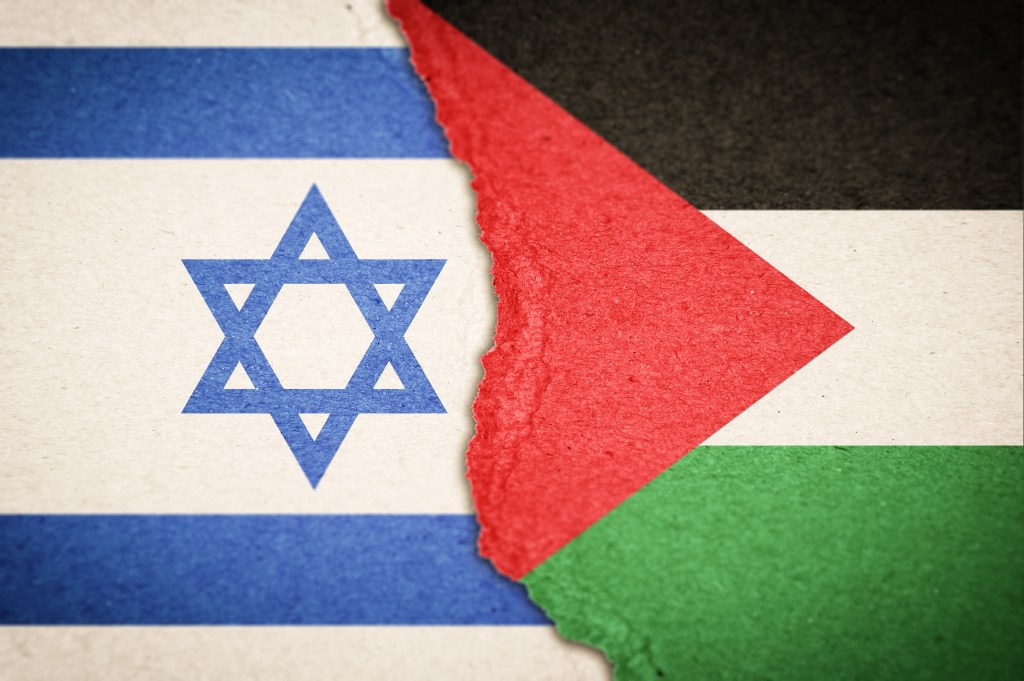
The Israel–Palestine conflict is among the most contested issues of the modern era, marked by deeply held convictions on all sides. The competing narratives shape how the conflict is interpreted and judged, yet neither can be evaluated responsibly in isolation. An honest assessment requires examining the historical background, political developments, and underlying claims that inform each position.
Introduction
The conflict between Israel and Palestine stands as one of the most enduring and deeply rooted disputes in modern history. It centers primarily on land, security, and competing narratives of oppression and legitimacy. In the wake of the recent Israel–Hamas conflict, Israel’s legitimacy as a nation has faced increased scrutiny, including allegations of discriminatory policies and occupation in disputed territories. At the same time, some media outlets have portrayed Hamas’ actions primarily as a response to Israeli occupation and oppression, further shaping how the conflict is publicly interpreted. Any responsible examination of this complex conflict must take seriously both Israel’s claim to land and statehood and the grievances of the Palestinian people.
Several key questions naturally arise when examining the conflict between Israel and Palestine. For example, how does Israel justify its claim to the land and its legitimacy as a nation? What is Palestine, and what are the primary grievances cited by Palestinians? What historical events and negotiations led to Israel’s statehood and the partitioning of land between Israel and the West Bank and Gaza? How does Israel reconcile its claim to the land with Palestinian objections to occupation? While a comprehensive treatment of such questions lies beyond the scope of this overview, exploring them provides a pathway to gaining a better understanding of the perspectives of both sides and the underlying tensions driving the ongoing conflict.
Recent Events and Competing Narratives
On October 7, 2023, Hamas militants entered Israel from Gaza and launched a coordinated attack, killing more than 1,200 civilians, including families targeted in their homes, and abducting more than 240 civilians into Gaza as hostages. The following day, Israel declared war and responded swiftly and forcefully. The attack on Israel marked the deadliest day for Jews since the Holocaust.[1]
In the wake of the Israel-Hamas war, some have argued that Hamas is justified in its attacks as a response to decades of perceived oppression stemming from Israel’s occupation of Palestinian land.[2] Others have accused Israel of maintaining an apartheid system that economically oppresses Palestinians.[3] These arguments portray Israel as the oppressor and occupier, suggesting that Hamas’ attacks on Israel are justified as acts of reclaiming stolen land and asserting Palestinians’ historical rights to the territory.
The Israeli perspective on the Israel-Hamas conflict presents a different picture. According to Israel, Hamas’ attacks are not justified responses to oppression but deliberate acts of terrorism threatening Israel’s national security and its citizens. Israel argues that its statehood is legitimate and its actions are necessary for self-defense against ongoing threats from Hamas and other militant groups.[4] Additionally, Israel rejects the accusation that it maintains an apartheid system by pointing to its efforts promoting coexistence and economic development, as well as providing equal civil, political, and religious rights granted to all Israeli citizens, including Jews, Arabs, and other minorities. It also points to legal protections afforded to lawful non-citizen residents and visitors.[5] From this viewpoint, Israel is defending its citizens and residents, including Arabs and Muslims, while protecting its statehood against terrorism and striving for peace in the region.
The competing narratives shape how the conflict is interpreted and judged, yet neither can be evaluated responsibly in isolation. An honest assessment requires examining the historical background, political developments, and underlying claims that inform each position. Only by considering these factors together can the depth of the conflict be properly understood and examined with honesty.
Framework and Limits for Evaluating Legitimacy Claims
Israel’s claim to the land and its legitimacy as a nation are grounded primarily in religious, historical, and political factors. Among the primary religious factors supporting Israel’s claim to the land is its covenantal significance in Judaism as the land promised by Yahweh to the Jewish people, as recorded in the Torah and the Hebrew Scriptures (Gen 12:7; 13:15; 15:18; 17:8; Exod 23:31; Josh 1:1–4; 1 Chr 16:14–18). At the same time, the land also holds religious significance for many Palestinians, particularly within Islam, which regards Jerusalem and the Al-Aqsa Mosque as sacred. These religious factors help explain the depth of attachment on both sides, even if their role in establishing modern national legitimacy remains debated.
There is no doubt that religious considerations lie at the very heart of the conflict and are essential to understanding it properly and respectfully. However, critics often view religious factors alone as inadequate or even illegitimate for establishing modern national legitimacy, especially given the ongoing conflicts related to statehood, occupation, oppression, and terrorism. Historical and political factors are generally considered more decisive in determining national legitimacy and therefore provide practical common ground for examining competing claims. As such, these factors merit careful consideration.
A Brief History of the People
Today, both Jews and Palestinians trace their ancestry to Canaan, claiming rights to the land. Contemporary Jews trace their lineage to the ancient Hebrews in Canaan and are widely recognized as descendants of the ancient Jewish people. Palestinians often claim descent from the ancient Philistines in Gaza.[6] However, the Philistines disappeared as a people group by the late 5th century BCE due to conquests by the Neo-Babylonian and Achaemenid Empires, which weakens the connection.[7] That said, Palestinians are unquestionably Arab, and the region now called Israel or Palestine did not have an Arab identity until the Islamic Caliphates arose in the 7th century CE, nearly two thousand years after ancient Israel was formed.[8] Overall, the Jewish historical and ancestral connection to the land predates Palestinian claims by thousands of years and is more extensively attested in the ancient textual and archaeological record, whereas Palestinian claims rest more heavily on later regional presence and identity. Nonetheless, both have maintained a historical presence in the land.
A Brief History of the Land
In terms of the land itself, the historical narrative adds both complexity and clarity to the Israel-Palestine conflict. From ancient civilizations like Canaan and the Kingdoms of Israel and Judah to the colonial rule of the Ottoman Empire and the British Mandate, the region has witnessed a succession of empires and cultures. Beginning with Canaan, the land was inhabited by people known as Canaanites. Over time, other groups migrated into Canaan. Some migrants, including the Semitic Amorites, Egyptians, Hyksos, Hurrians, Philistines, and Hapiru, invaded Canaan and controlled parts of the region. Eventually, the Egyptians controlled much of Canaan, followed by the Philistines in the southern coastal plains near modern Gaza, and the Hebrews in the central hill country later associated with Israel and Judah. Beginning in the late 2nd millennium BCE or perhaps earlier, Canaan became the homeland of the Jewish people.[9] Eventually, the Hebrews established the Kingdoms of Israel and Judah, solidifying the Jewish connection to the land. These kingdoms existed until the Assyrian conquest of Israel in 722 BCE and the Babylonian conquest of Judah in 586 BCE, which led to the destruction of Jerusalem and the Jewish temple and the initial dispersion of the Jewish people.
The land continued to experience a succession of empires, spanning from the Persian and Greek Empires to the Roman and Byzantine Empires, before the arrival of the Islamic or Arab Caliphates in the 7th century CE. During the Islamic Caliphates, Arab and Islamic culture took root in the territory. The construction of the Al-Aqsa Mosque, completed between 685 CE and 715 CE atop the historical site of the ancient Jewish temple, further solidified Islamic presence in the region.[10] The Caliphates eventually fell, giving rise to the Crusader States, followed by the Ayyubid Dynasty, the Mamluk Sultanate, and the Ottoman Empire, which took control in 1299 CE and ruled until the end of World War I. The British Mandate then followed, lasting until the establishment of the modern state of Israel. Overall, the land’s history shows that Jewish ties to the territory are both earlier and more extensively attested in the ancient record, while Arab presence and attachment became established across later centuries. These realities carry considerable historical and cultural significance for both communities.
A Brief History of “Palestine”
Another important aspect in the Israel-Palestine discussion is the use of the name “Palestine” for the territory. The term “Palestine” derives from Philistia, the ancient land of the Philistines. The earliest recorded official use of “Palestine” for the region now comprising Israel, Gaza, and the West Bank was by the Roman Empire following its conquest in the 2nd century CE. The Romans renamed the territories of Judea, Samaria, and Galilee to “Syria Palaestine” in an effort to erase the Jewish connection to the land.[11] The name “Palestine” persisted throughout history, and some still use the term to undermine the Jewish connection.
In the centuries that followed, the region known as Palestine was governed by successive empires, yet no sovereign Palestinian nation-state ever existed. In fact, the modern concept of a distinct Palestinian identity did not emerge until the late 19th and early 20th centuries, becoming more sharply defined and predominantly associated within a regional Arab framework following Israel’s establishment in 1948.[12] Even so, Jews and Arabs alike, including other minorities, have maintained a historical presence in the land. For this reason, the historical, cultural, religious, and emotional connections to the land run deep for both Jews and Arabs, and they form an essential part of any responsible discussion regarding the conflict.
Background and Birth of the Modern State of Israel
No doubt, the most significant contention in the Israel-Palestine debate is the establishment of the State of Israel in 1948. While Israel asserts its legitimate claim to land, statehood, and security, Palestinians cite grievances rooted in displacement, occupation, and oppression. Navigating these competing claims requires examining the historical events leading up to Israel’s formation and the ensuing geopolitical developments.
When the Ottoman Empire dissolved after World War I, the League of Nations granted Britain temporary administrative control over the territory of Palestine, which encompassed present-day Israel, the West Bank, Gaza Strip, and Jordan. This became known as the British Mandate for Palestine. The mandate sought to fulfill the Balfour Declaration of 1917, which expressed support for the creation of a Jewish homeland while simultaneously protecting the rights of non-Jewish communities.[13] Tensions increased between Jewish and Arab communities, and the British government issued the Peel Commission in 1937, proposing a partition plan recommending the division of Palestine into separate Jewish and Arab states with an economic union and a special international regime for Jerusalem. Jewish leadership accepted the plan. Arab leadership, however, firmly rejected the Peel Commission and adamantly opposed the idea of a Jewish state.[14] Then, on November 29, 1947, the United Nations General Assembly passed Resolution 181, recommending the partition of Palestine into separate Jewish and Arab states, with Jerusalem as an international city. Once more, the Jewish leadership embraced the resolution, while the Arab community overwhelmingly rejected the plan and opposed the formation of a Jewish state.
On the day the British Mandate was set to expire, Israel declared its independence on May 14, 1948, citing the historical connection of the Jewish people to the land and referring to the international legitimacy provided by the UN resolution. When Israel declared its independence, it did so within the U.N.’s framework while accepting a two-state solution.[15] Israel’s declaration explicitly committed to establishing a democratic system of government with a constitution, which was a unique development in the Middle East and a sharp contrast to the region’s restricted political systems and monarchies. Israel’s declaration also guaranteed freedom of religion and the protection of holy sites of all faiths. It promised full equality of social and political rights to all inhabitants, regardless of religion, race, or gender, and pledged to ensure freedom of religion, language, education, and culture.[16] Nonetheless, the armies of every neighboring Arab state—Lebanon, Syria, Iraq, Transjordan, and Egypt—launched a military attack against the newly formed nation of Israel just one day after its establishment in order to destroy it. Against all odds, the Jewish state survived its birth, and most of the land set aside for an Arab state, such as the West Bank and East Jerusalem, became occupied territory, not by Israel but by Jordan, a fact commonly overlooked.[17] The war’s outcome and broader hostilities also led to the displacement of many Arabs, which remains a deeply contentious issue in the Israeli-Palestinian conflict.[18] Ultimately, Israel’s declaration of independence and the war’s outcome were legal.
The Ongoing Conflict
Twenty years after the establishment of the State of Israel, the Six-Day War began. In 1967, Egypt planned another military strike against Israel, deploying one hundred thousand troops to the Sinai Peninsula, ordering the UN peacekeepers out, and forming a military alliance with Syria and Jordan. In response, Israel launched a preemptive strike, swiftly neutralizing the Egyptian and Syrian armies and taking control of Gaza and the Sinai Peninsula. Israel did not attack Jordan, the nation occupying the West Bank, in exchange for peace. However, Jordan attacked Israel, and as a result, Israel took control of the territory Jordan had occupied, specifically the West Bank, with no intention of retaining or permanently occupying any land designated for an Arab state under the original U.N. partition plan. Rather, Israel sought to trade the captured Arab territories for recognition and peace agreements with neighboring Arab nations. However, the Arab nations persisted in rejecting Israel’s existence and declared a stance of no recognition, no peace, and no negotiations, resulting in Israel retaining the captured territories.[19]
Then, in 1978, Egypt, under new leadership, signed a peace treaty with Israel. As part of the agreement, Israel returned the captured Sinai Peninsula, a territory larger than Israel itself and rich in oil, to Egypt in exchange for peace and recognition.[20] Then, on October 26, 1994, Israel and Jordan signed a peace treaty establishing a solid framework for future relations. Jordan became only the second Arab nation to make peace with Israel, following the example of Egypt’s treaty in 1978.[21]
While Israel managed to establish peace treaties with Egypt and Jordan, attempts to negotiate with Palestinian leadership in the West Bank and Gaza proved unsuccessful, including the Oslo Accords in 1993 and the two-state resolutions of 2000 and 2008. Despite these failures, Israel unilaterally withdrew from Gaza and dismantled its settlements in 2005, granting Palestinians full control over the territory. Soon after, Hamas won the 2006 Palestinian elections, and instead of focusing on land development for the benefit of its people, Hamas turned Gaza into a terrorist stronghold launching thousands of rockets into Israel. And on October 7, 2023, Hamas militants entered Israel from Gaza and launched a coordinated attack, killing over 1,200 civilians, including families targeted inside their homes, and abducting more than 240 civilians into Gaza as hostages. The following day, Israel declared war and responded swiftly and forcefully. The attack on Israel marked the deadliest day for Jews since the Holocaust.[22]
“From the River to the Sea”
In the wake of the Israel-Hamas war, advocates for Palestine frequently use the slogan, “From the river to the sea, Palestine will be free,” to convey their goal of a single Palestinian state spanning from the Jordan River to the Mediterranean Sea. This phrase symbolizes the aspiration to encompass more than the territory proposed by the United Nations, most notably the land within the sovereign State of Israel. Yet the slogan itself is both historically misleading and controversial. It is misleading because there has never been a sovereign Palestinian nation-state or comparable independent entity in the territory. It is controversial because the slogan conveys the elimination of Israel as the only Jewish state and rejects its right to exist, contrary to the framework established by U.N. General Assembly Resolution 181.[23] In contrast, Israel consistently acknowledges both Jewish and Arab connections to the land and demonstrates its desire to recognize both a Jewish and an Arab state in exchange for peace.
Toward a More Nuanced Understanding
Examining the longstanding Israel-Palestine conflict highlights the importance of understanding the perspectives of both sides. On the one hand, Israel’s right to exist is grounded in historical, political, cultural, and religious factors, including its ancient ties to the land and its recognition as a state by the international community. Israel upholds its national security by safeguarding itself against threats while actively pursuing peace treaties, including those involving a Palestinian state. Although Israel’s military operations may be subject to criticism and scrutiny about whether they constitute a reasonable, proportionate response to violations, Israel maintains a legal right to protect itself from military and existential threats.
Moreover, the Jewish connection to the land is not merely political or modern, but historical, covenantal, and continuous across thousands of years. Jewish identity, faith, language, and collective history have remained connected to this land through exile, return, and ongoing presence over millennia. For the Jewish people, the land represents not only territory but also promise, history, survival, and restoration after centuries of dispersion and persecution. The modern State of Israel, therefore, represents far more than a modern political development. It marks the national reestablishment of a historic people in the very land that has long been central to their identity, heritage, and faith. Recognizing this helps explain why many Jews experience questions of legitimacy and security not only as matters of policy but also as matters of personal survival and faith.
On the other hand, it is essential to recognize that Palestinian Arabs are not foreign to the land in any meaningful historical sense either. Arab communities have lived in the region for many centuries, developing families, towns, traditions, and cultural life rooted in the same geography, essentially becoming a homeland for many Arabs. Acknowledging this reality does not negate Israel’s historical background and legal claims, but it does underscore the complexity of the conflict and supports a more nuanced understanding.
As the Israel-Palestine debate continues, it is essential to cultivate understanding and empathy for the struggles of both Jewish and Palestinian communities in the region. Such an approach does not mean we should abandon our convictions or overlook moral and legal violations. Neither does it exempt either side from careful scrutiny of its actions and policies. The key is to be empathetic while also affirming the historical, political, and legal facts. Achieving this balance is essential for encouraging constructive dialogue and progressing toward a peaceful resolution.
[1] “Israel-Hamas War,” Britannica, Accessed March 1, 2024, https//www.britannica.com/event/Israel-Hamas-War-of-2023.
[2] “Fringe-Left Groups Express Support for Hamas’s Invasion and Brutal Attacks in Israel,” Anti-Defamation League, Accessed March 1, 2024, https//www.adl.org/resources/blog/fringe-left-groups-express-support-hamass-invasion-and-brutal-attacks-israel; “Weekly Briefing: Half of Americans under 35 see Hamas attack as ‘justified by Palestinian grievances’,” Mondeweiss, Accessed March 1, 2024, https//mondoweiss.net/2023/12/weekly-briefing-half-of-americans-under-35-see-hamas-attack-as-justified-by-palestinian-grievances/; “Israel-Hamas Conflict,” Harvard Caps Harris Poll, Accessed March 1, 2024, https//harvardharrispoll.com/wp-content/uploads/2023/10/HHP_Oct23_KeyResults.pdf.
[3] “Israel’s Occupation: 50 Years of Dispossession,” Amnesty International, Accessed February 28, 2024, https//www.amnesty.org/en/latest/campaigns/2017/06/israel-occupation-50-years-of-dispossession/; “Israel’s Apartheid Against Palestinians: A Cruel System of Domination and a Crime Against Humanity,” Amnesty International, Accessed February 28, 2024, https//www.amnesty.org/en/latest/news/2022/02/israels-apartheid-against-palestinians-a-cruel-system-of-domination-and-a-crime-against-humanity/.
[4] “October 7, 2023: Israel says it is ‘at war’ after Hamas surprise attack,” CNN, Accessed February 29, 2024, https//www.cnn.com/middleeast/live-news/al-aqsa-storm-militants-infiltrate-israel-after-gaza-rockets-10-07-intl-hnk/index.html.
[5] “Netanyahu to NBC: Apartheid’s hogwash, real danger is ethnic cleansing of Jews,” Jerusalem Post, Accessed March 2, 2024, https//www.jpost.com/israel-news/article-753311.
[6] Walter C. Kaiser, Jr., A History of Ancient Israel: From the Bronze Age through the Jewish Wars (Nashville: Broadman & Holman Publishers, 1998), 19.
[7] Eric M. Meyers, The Oxford Encyclopedia of Archaeology in the Near East: Volume 4 (Oxford: Oxford University Press, 1997), 313; Philip R. Davies, In Search of Ancient Israel: A Study in Biblical Origins (London: Bloomsbury T&T Clark, 2015), 50.
[8] Nazmi Al-Ju’beh, Palestinian Identity and Cultural Heritage (Beyrouth: Presses de l’Ifpo, 2008), 205–231.
[9] “Canaan,” Britannica, Accessed March 1, 2024, https//www.britannica.com/place/Canaan-historical-region-Middle-East.
[10] “Al-Aqsa Mosque: History, Construction & Architecture,” Study, Accessed February 27, 2024, https//study.com/academy/lesson/al-aqsa-mosque-jerusalem-history-construction-purpose.html.
[11] “Palestine,” Britannica, Accessed March 1, 2024, https//www.britannica.com/place/Palestine.
[12] Rashid Khalidi, Palestinian Identity: The Construction of Modern National Consciousness (New York: Columbia University Press, 2010), 19-22; James L Gelvin, The Israel-Palestine Conflict: One Hundred Years of War. 3rd ed. (Cambridge: Cambridge University Press, 2014), 92-93.
[13] “History of the Balfour Declaration,” Jewish Virtual Library, Accessed March 1, 2024, https//www.jewishvirtuallibrary.org/commentary-on-the-balfour-declaration; “The Belfour Declaration,” Anti-Defamation League, Accessed March 2, 2024, https//www.adl.org/resources/backgrounder/balfour-declaration.
[14] “The Peel Comission,” Britannica, Accessed March 1, 2024, https//www.britannica.com/event/Peel-Commission; “British Palestine Mandate: The Peel Commission,” Jewish Virtual Library, Accessed March 2, 2024, https//www.jewishvirtuallibrary.org/the-peel-commission.
[15] “United Nations Resolution 181,” Britannica, Accessed March 2, 2024, https//www.britannica.com/topic/United-Nations-Resolution-181; ” What Was the UN Partition Plan Resolution 181 and Why Does it Matter Today,” American Jewish Committee, Accessed March 2, 2024, https//www.ajc.org/news/what-was-the-un-partition-plan-resolution-181-and-why-does-it-matter-today.
[16] “The Declaration of the Establishment of the State of Israel,” Ministry of Foreign Affairs, Accessed March 2, 2024, https//www.gov.il/en/Departments/General/declaration-of-establishment-state-of-israel.
[17] “The Middle East Problem,” Prager U, Accessed February 16, 2024, https//www.prageru.com/videos/the-middle-east-problem; “Why Isn’t There a Palestinian State,” Prager U, Accessed February 16, 2024, https//www.prageru.com/videos/why-isnt-there-a-palestinian-state.
[18] “From the River to the Sea: What does the Palestinian Slogan Really Mean,” Aljazeera, Accessed March 2, 2024, https//www.aljazeera.com/news/2023/11/2/from-the-river-to-the-sea-what-does-the-palestinian-slogan-really-mean.
[19] Sharon Rusten and Michael E. Rusten, The Complete Book of When & Where in the Bible and throughout History (Wheaton, IL: Michael E Rusten, 2005), 468-469; “The Middle East Problem,” Prager U, Accessed February 16, 2024, https//www.prageru.com/videos/the-middle-east-problem; “Why Isn’t There a Palestinian State,” Prager U, Accessed February 16, 2024, https//www.prageru.com/videos/why-isnt-there-a-palestinian-state.
[20] “The Middle East Problem,” Prager U, Accessed February 16, 2024, https//www.prageru.com/videos/the-middle-east-problem.
[21] Sharon Rusten and Michael E. Rusten, The Complete Book of When & Where in the Bible and throughout History (Wheaton, IL: Michael E Rusten, 2005), 483–484.
[22] “Israel-Hamas War,” Britannica, Accessed March 1, 2024, https//www.britannica.com/event/Israel-Hamas-War-of-2023.
[23] “Slogan: “From the River to the Sea Palestine Will be Free,” Anti-Defamation League, Accessed March 2, 2024, https//www.adl.org/resources/backgrounder/slogan-river-sea-palestine-will-be-free
 Tristan Fenholt